People from our community
who changed India.

Five transgender women from Maharashtra. One went to the Supreme Court and came back with a country that finally had a word for her. One writes poetry that made a university create an award for it. One stood for the assembly, one sits on a court panel, one runs her village. These are their stories.

01
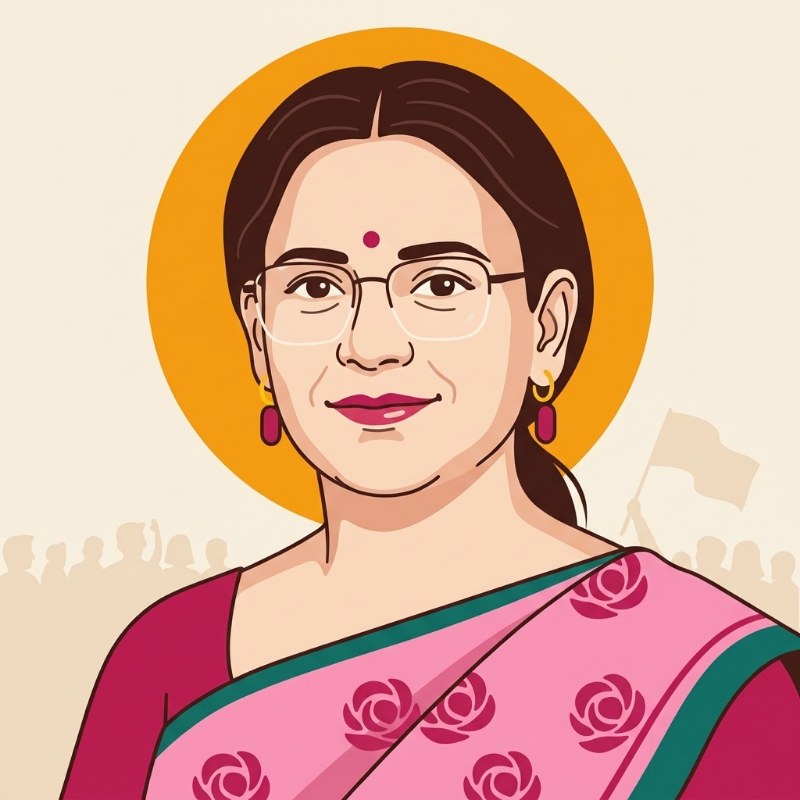
Illustrated portrait of Shreegauri Sawant, transgender activist and founder of Sakhi Char Chowghi Trust
Shreegauri Sawant Activist & NGO Director · Mumbai Petitioner in the NALSA case · Founder, Sakhi Char Chowghi Trust

She was seven when her mother died, and still a teenager when she left her father's house rather than keep pretending to be a son. Years later, the country's highest court used a case she was part of to say that people like her exist in law.

Gauri Sawant grew up in Pune. Her father was a police officer; her grandmother raised her after her mother's death. She left home in her teens and, like thousands of transgender women before her, found her family in the community rather than at home.

In 2000 she founded the Sakhi Char Chowghi Trust in Mumbai. The work was unglamorous and urgent: safe-sex education, HIV counselling, and support for transgender people and people living with HIV/AIDS — at a time when a hospital visit could mean being turned away at the door. She still directs it.

Then she took the fight into court. Sawant was one of the petitioners in National Legal Services Authority v. Union of India — the case in which the Supreme Court, in April 2014, recognised transgender persons as a third gender with the full protection of fundamental rights. That single judgment is the reason a transgender person in India can ask for an identity certificate, a reservation in education, or a place on a government form at all. Nearly every screen in the Astitva app rests on it.

In the same year she became the first transgender person to file a petition in the Supreme Court seeking adoption rights for transgender people. That was not an abstract argument for her. In 2008 she had adopted Gayatri, the daughter of a sex worker who had died of AIDS — a child who, she has said, would otherwise have been sold into trafficking. She went to court so that other transgender women could do legally what she had already done out of love.

Most of India met her in 2017, when a Vicks advertisement told the story of that mother and daughter without a word of pity. It was watched millions of times. In 2019 the Election Commission in Maharashtra named her a goodwill ambassador — the first transgender person given the role — and she spent the campaign telling people that a vote is a responsibility, not a favour. In 2023 her life was made into the series Taali, with Sushmita Sen playing her.

2000 · Founded Sakhi Char Chowghi Trust 2008 · Adopted her daughter Gayatri 2014 · Petitioner, NALSA third-gender judgment 2014 · First trans adoption-rights plea in the Supreme Court 2019 · Election Commission goodwill ambassador, Maharashtra
02
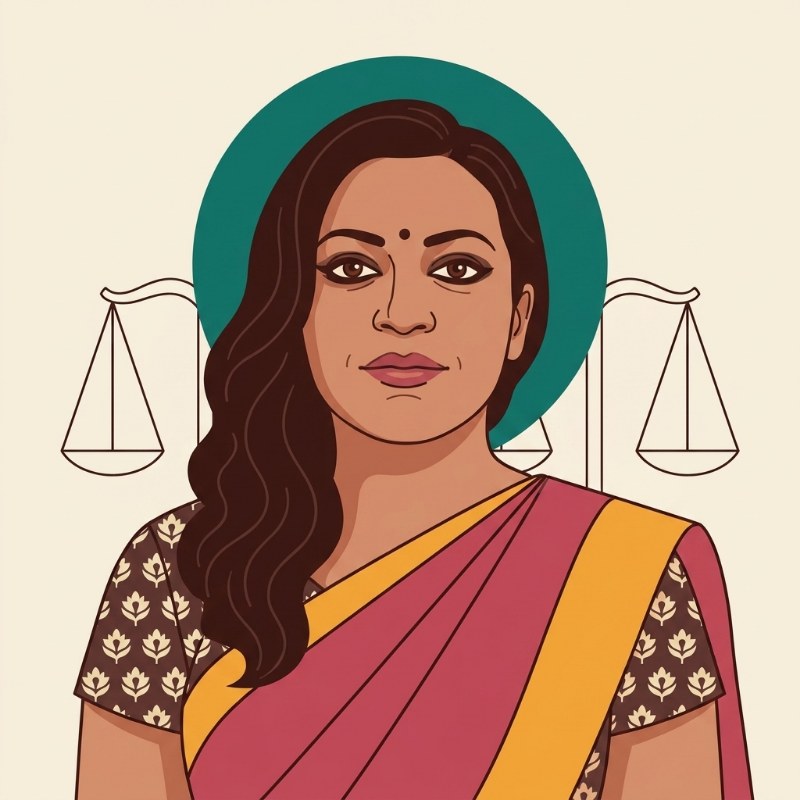
Illustrated portrait of Disha Pinky Shaikh, Marathi poet, writer and political spokesperson
Disha Pinky Shaikh Poet, Writer & Spokesperson · Yeola, Nashik First transgender spokesperson of a political party in Maharashtra

She turned the thing that was used against her — her voice — into the reason people now listen. First in Marathi newspapers, then in poetry, then from a political podium.

Disha Pinky Shaikh was born in Yeola, a small town in Maharashtra's Nashik district, and was raised by a single mother. She built her standing not through money or office, but through language — the one thing nobody could take from her.

In 2017 the editor of a Marathi weekly offered her a column. She used it the way she has used every platform since: to write about caste, poverty, gender and the daily humiliations that rarely make the news. Writing, she has said, became a duty rather than a hobby.

On 23 February 2019 the Vanchit Bahujan Aghadi appointed her its state spokesperson — making her the first transgender woman to be the spokesperson of a political party in Maharashtra. She has said she took nearly a year to accept, worried about how her community would react, and joined only once she was convinced the party wanted her to speak rather than merely to be seen. "Political representation of transgenders or sexual minorities is very important for change in the society," she said at the time.

In 2021 she published her first poetry collection, Kurup — Marathi for "ugly", a word thrown at people like her, taken back and put on a cover. The poems place transgender life inside the larger machinery of caste, class and patriarchy, and they were taken seriously by critics who had never had to read such a book before. In 2022, Shivaji University in Kolhapur made her the first recipient of the Rutvij Kalsekar Poetry Award, presented on 5 August that year.

2017 · Began writing columns in Marathi 2019 · First trans spokesperson of a party in Maharashtra 2021 · Debut poetry collection Kurup 2022 · First Rutvij Kalsekar Poetry Award
03
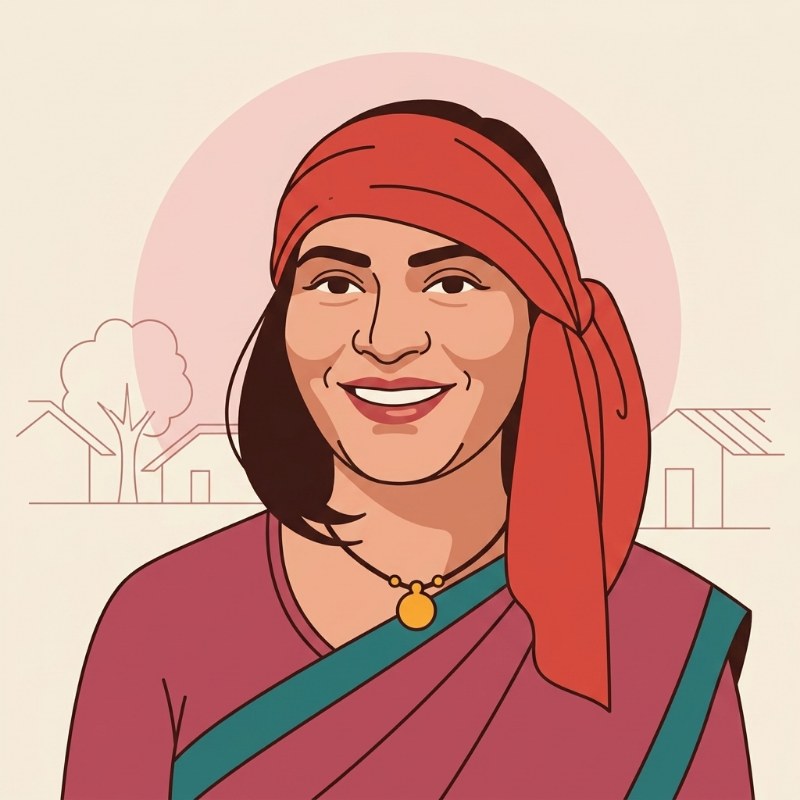
Illustrated portrait of Shameebha Patil, transgender assembly candidate from Raver, Jalgaon
Shameebha Patil Social Worker & Political Candidate · Raver, Jalgaon Maharashtra's only transgender candidate in the 2024 assembly election

In a state of eleven crore people and 288 seats, she was the only transgender person on any assembly ballot in 2024. She did not campaign on being transgender. She campaigned on bananas, irrigation and back pain.

Shameebha Patil has been a social worker since 2007. She holds a post-graduate degree in Marathi literature, has taught as visiting faculty at the Tata Institute of Social Sciences in Mumbai, and coordinates the State Transgender Rights Committee. She joined the Vanchit Bahujan Aghadi in 2019 and worked in its youth wing — including helping another transgender woman, Anjali Patil, through the court case that let her contest a village election.

In 2024 the party fielded her from Raver in Jalgaon district, a banana-growing belt, against candidates from Congress and the BJP. She was, in the end, the only transgender candidate in the entire Maharashtra assembly election.

Her manifesto is the part worth remembering. She asked for one per cent horizontal reservation for transgender persons, free gender-affirming surgery in government hospitals, and a monthly allowance for transgender persons over forty — for whom, after a lifetime of exclusion from formal work, there is no pension of any kind. And alongside that: a guaranteed price for crops, irrigation, jobs for young people, rights for the plantation workers of Raver — four in ten of them women — and health care for those women, down to the PCOD and chronic back pain that come from bending over a field all day.

She polled 8,453 votes and did not win. Most newspapers never mentioned her. She had already done the harder thing: proved that a transgender woman can stand before an ordinary rural electorate and ask to be judged on farm policy.

2007 · Social work begins 2019 · Joins VBA; State Transgender Rights Committee 2021 · Helped Anjali Patil's High Court fight 2024 · Only trans candidate in the Maharashtra assembly election
04
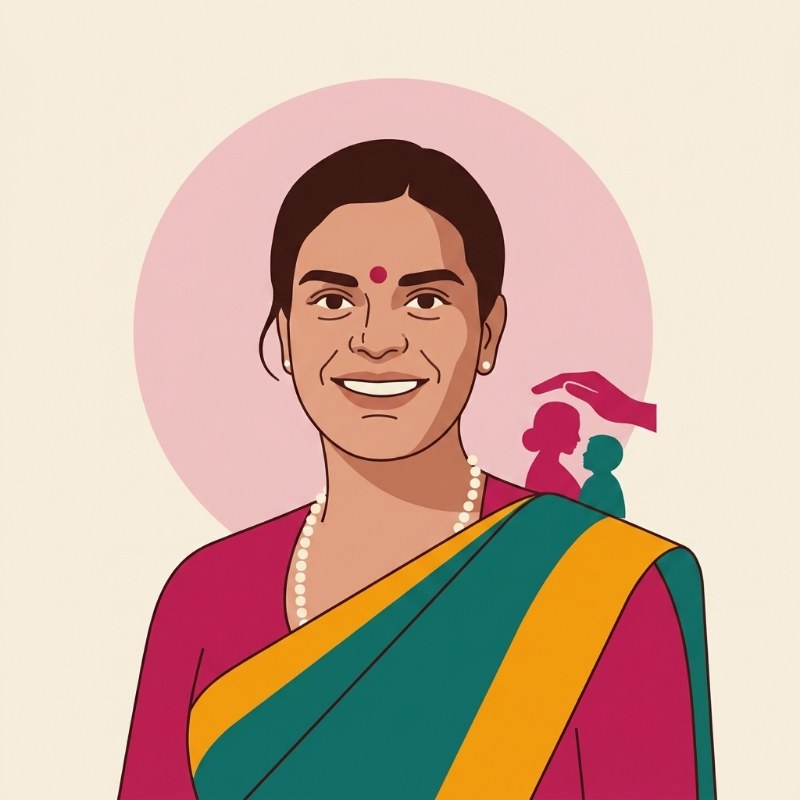
Illustrated portrait of Vidya Kamble, transgender member of the National Lok Adalat panel in Nagpur
Vidya Kamble Lok Adalat Panel Member & Counsellor · Nagpur First transgender person on a Lok Adalat panel in Maharashtra

At seventeen she was thrown out of her home. At twenty-nine she was sitting on a judicial panel, deciding other people's disputes.

Vidya Kamble left home in Nagpur at 17, when her family discovered who she was. She found her way to the Sarathi Trust, which she now calls her family and where she works as a counsellor and peer educator — the person who sits with someone newly abandoned and explains that there is a life on the other side of it.

In 2018, at 29, she was appointed a member of the National Lok Adalat panel in Nagpur — reported as the first transgender person in Maharashtra to sit on one. A Lok Adalat is a people's court: instead of years of litigation, a small panel brings both sides together and settles the matter that day, and the settlement is binding. She sits alongside a retired district judge and a practising lawyer, works mainly on Motor Accident Claims Tribunal matters, and mediates three or four cases a day.

The appointment mattered for two reasons at once. It put a transgender woman on the side of the bench that decides, in a system where transgender people usually appear only as complainants. And it said, in the plainest institutional language available, that her judgment could be trusted with other people's lives.

She has been blunt about why she is good at it, and about what it cost to get there — asking why a family that would never abandon a child born with a disability will abandon one born transgender.

"My family abandoned me, but I found a new family which is not judgmental. Understanding their issues and helping them is my main job."

— Vidya Kamble
At 17 · Forced out of home Counsellor & peer educator, Sarathi Trust 2018 · Joins the National Lok Adalat panel, Nagpur Mediates 3–4 cases a day
05
Illustrated portrait of Anjali Patil, first transgender person elected to a gram panchayat in Jalgaon district
Anjali Patil Gram Panchayat Member · Bhadli Budruk, Jalgaon First transgender person elected to a village council in Jalgaon district

The officials told her she could not stand as a woman. The High Court told them she could. Her village then elected her by 560 votes.

In January 2021, Anjali Patil — then 40, contesting on a Vanchit Bahujan Aghadi ticket — filed her nomination for Ward No. 4 of the Bhadli Budruk gram panchayat in Jalgaon district, a seat reserved for women. Election officials rejected it: the voter roll recorded her as transgender, so, they said, she could not contest a women's seat.

She went to the Aurangabad bench of the Bombay High Court — a village-level candidate, days before polling, taking on the returning officer. The court set the rejection aside and restored her candidature. Fellow VBA worker Shameebha Patil helped her through the proceedings.

She then won the seat by 560 votes in the polling of 15 January 2021, becoming the first transgender person elected to a gram panchayat in Jalgaon district — chosen not by a party list or a reserved quota, but by neighbours who had watched her fight for the right to be on the ballot at all.

What she promised afterwards was resolutely ordinary, and that is the point: basic amenities for the village, a properly equipped anganwadi for the children, health facilities within reach. "Our emphasis will be on providing basic amenities for the villagers," she said after the result. A transgender woman in rural India had stopped being a subject of debate and become the person who fixes the water supply.

2021 · Nomination rejected for a women's seat 2021 · Bombay High Court restores her candidature 2021 · Wins Ward 4 by 560 votes First trans gram panchayat member in Jalgaon district
Why we tell these stories

Proof travels further
than encouragement.

A person deciding whether to apply for an identity certificate, or to go home for Diwali, or to stand for election, is not helped much by being told to be brave. It helps more to know that five women from the same state already did it — and what it took.

About these profiles

Everything above is drawn from publicly reported information — news reports, interviews and public records — about people who are living, public figures. Nothing here is invented or dramatised beyond what those sources state. If you find an error, or you are one of the people on this page and want something changed or removed, write to astitva.support@gmail.com and we will correct it.

Sources include: the Supreme Court's NALSA judgment (2014) and reporting on it; Wikipedia — Shreegauri Sawant; Indie Journal and The Satyashodhak on Disha Pinky Shaikh; Feminism in India and The Quint on Shameebha Patil; The Better India and Scroll.in on Vidya Kamble; The Free Press Journal and ETV Bharat on Anjali Patil.

Astitva is not affiliated with any of the people or organisations named on this page, and none of them endorse the app.

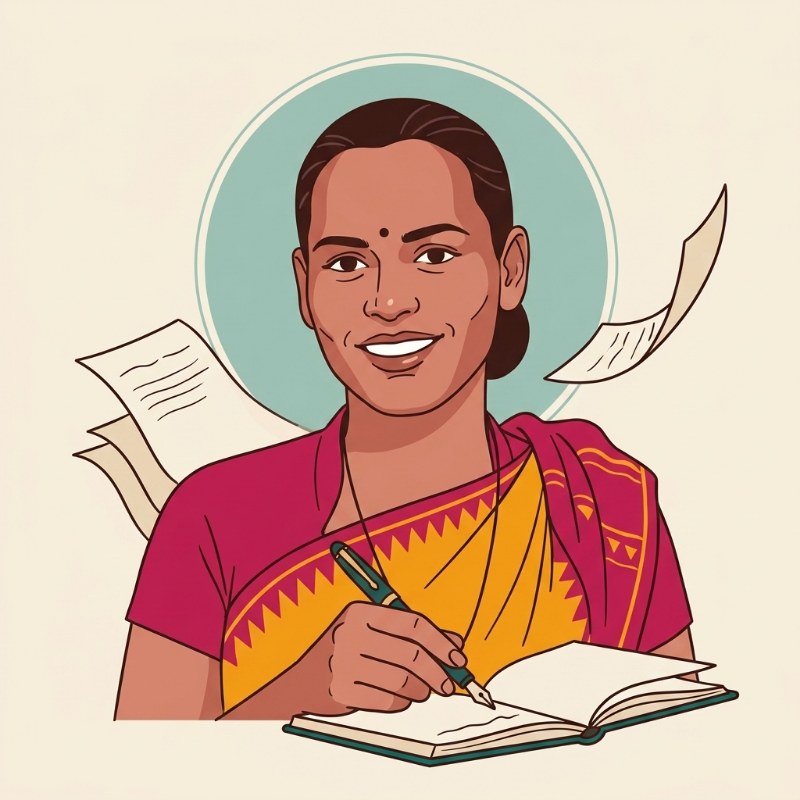
The pictures on this page are illustrated portraits created for Astitva as respectful artistic tributes — they are artworks, not photographs.

Your name belongs on a list like this

Astitva helps you take the first step — an identity certificate, a scheme, a job, a doctor who will see you. Free, private, in your language. आप अकेले नहीं हैं — तुम्ही एकटे नाही.

shield_person Get Started — Free phone_iphone Google Play Coming soon
lock Private by design translate EN · हिन्दी · मराठी favorite Free forever